Ambasador Cucumi prisustvovao proslavi Tanabata festivala
2026/7/6
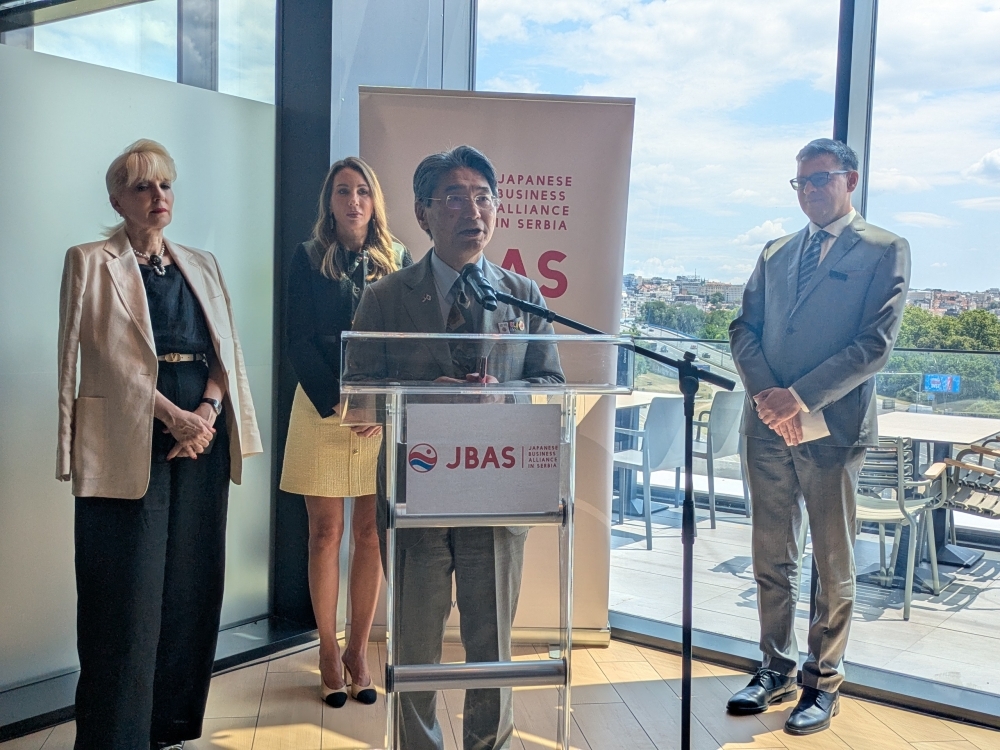
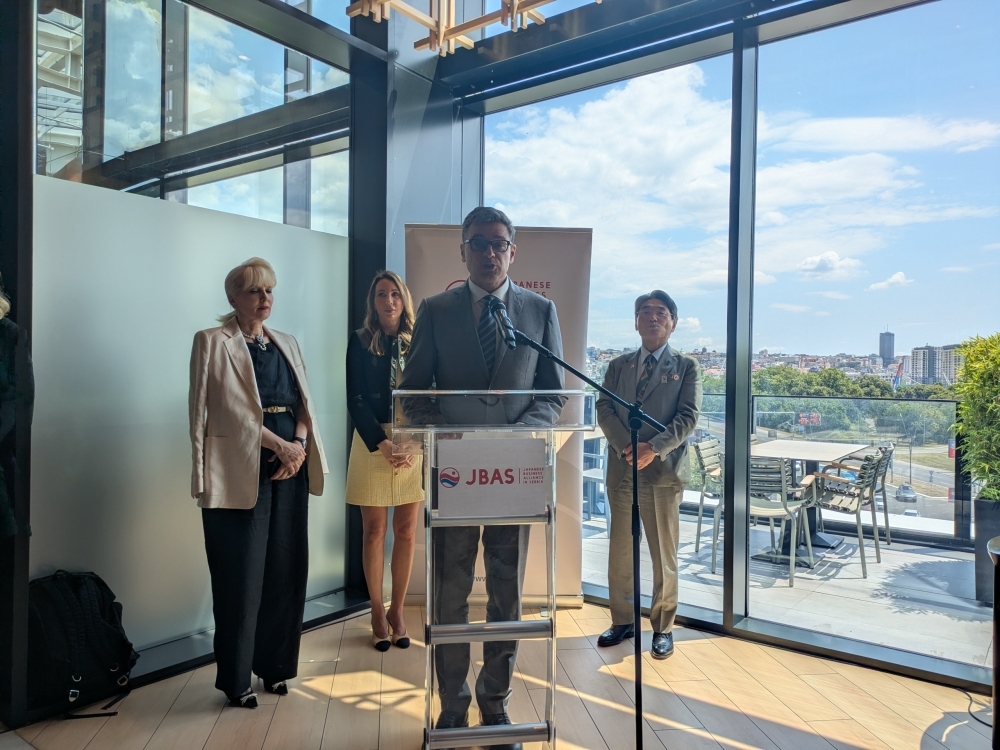
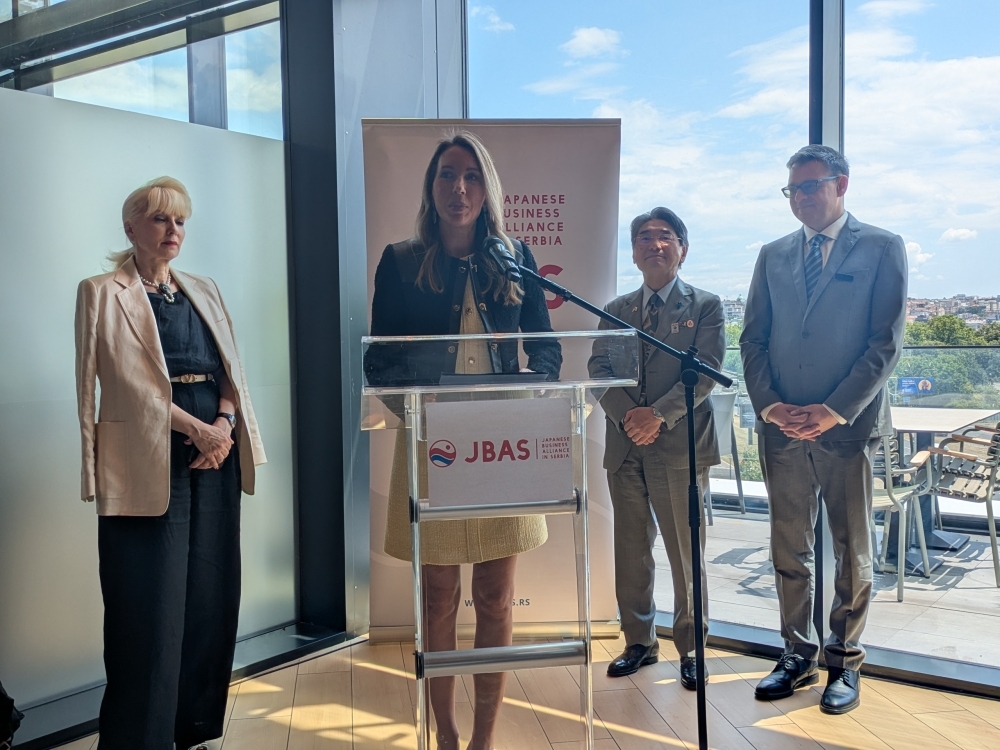
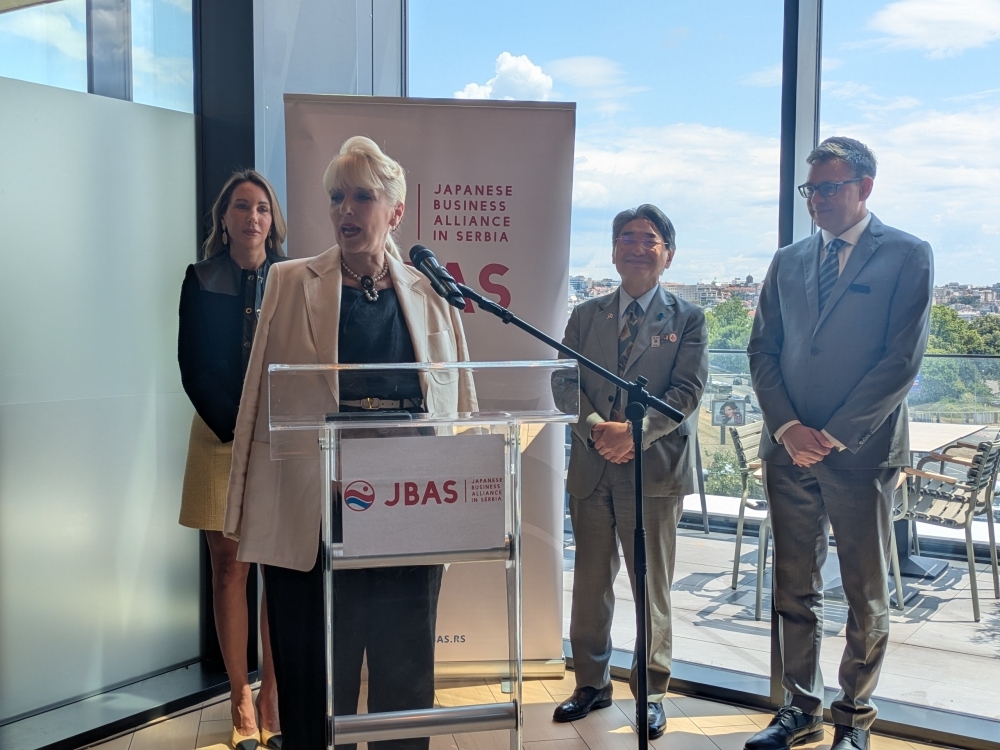
Dana 6. jula održana je proslava povodom festivala Tanabata u restoranu „Go Izakaya“, u organizaciji JBAS-a (Japanske poslovne alijanse u Srbiji).
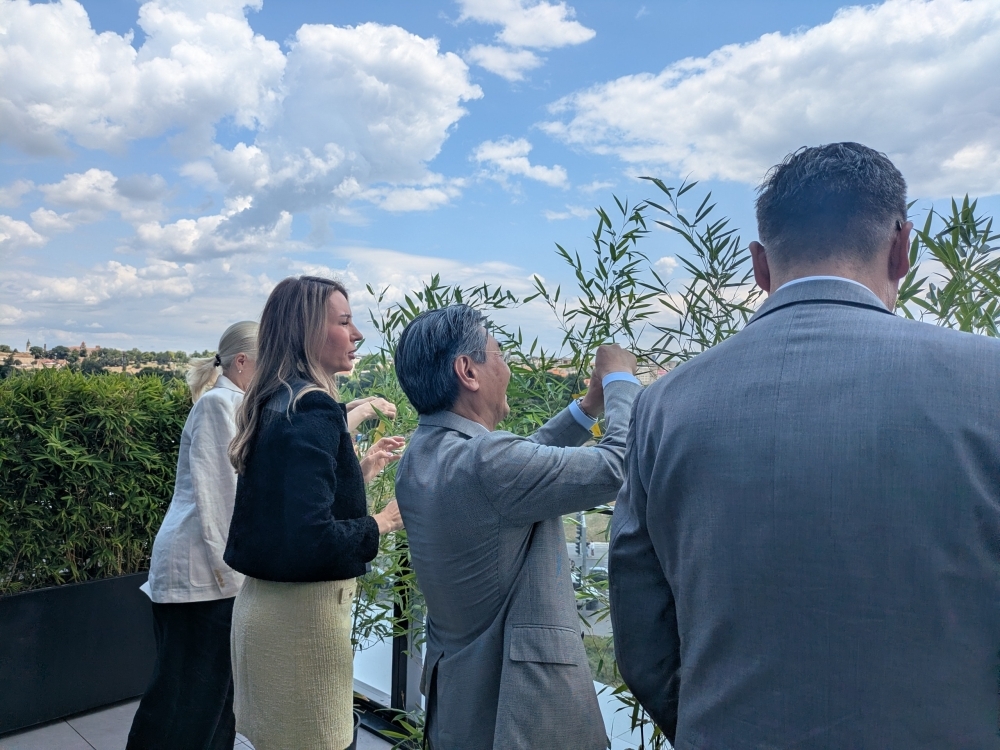
Događaju su prisustvovali ambasador Naohiro Cucumi, predsednik JBAS-a Goran Pekez, kao i ministarka rudarstva i energetike Dubravka Đedović Handanović i ministarka unutrašnje i spoljne trgovine Jagoda Lazarević. Tom prilikom su, u skladu sa tradicijom festivala Tanabata, na papirnim trakama (tanzaku) ispisali svoje želje i okačili ih na grane bambusa.
〈Ambasadorov govor〉
こんにちは。 Dobar dan.
First and foremost, I would like to express my deepest gratitude to the members of JBAS. Thank you very much for organising this Tanabata Festival, a traditional Japanese seasonal celebration, here in Belgrade today.
To be honest, I had forgotten about celebrating Tanabata for a very long time. My only remaining memory is from when I was seven or eight years old. My family set up a bamboo branch in our garden, and each of us wrote our own wish on small paper strips, called tanzaku, and tied them on the leaves. And then we looked up at the night sky, searching for Hikoboshi and Orihime—known in the West as the stars Altair and Vega. While I have forgotten what my exact wish was, I might have written, "I want to become a professional baseball player."
This festival is said to originate from an ancient Japanese Shinto ritual to pray for a bountiful harvest. A young maiden would weave garments for the deities using a handloom called a tanabata, placing them on a shelf to welcome the deities. Over time, this combined with a legend from China about the romance of Hikoboshi and Orihime, who are separated on opposite sides of the Milky Way and allowed to meet only once a year. This blend of traditions became the Tanabata Festival that I remember.
I believe that people write their specific wishes—such as family happiness, academic success, or a good marriage—on these paper strips, hanging them on bamboo leaves so that heaven might see and hear their prayers. And that, I suppose, is why we look up at the sky.
Ladies and Gentlemen,
Every day at home, I offer my morning greetings before the photographs of my late parents, parents-in-law, and aunts and uncles.
Two weeks ago, I visited the Embassy of Venezuela to express my condolences to the families of the victims of the recent devastating earthquake, assuring them that Japan stands in solidarity with the people of Venezuela.
And, I will attend a wedding soon to celebrate the marriage of a friend's son.
Reflecting on this, I realise that all of these actions share a common thread. That thread is the act of "praying." I am reminded once again that people, both in Japan and here in Serbia, pray on many different occasions.
I wish to pray for the peace and happiness of all people. I truly believe that as these individual prayers accumulate around the globe, they will give birth to and nurture a world more peaceful—a society where people can live freely and with dignity.
Let me conclude my remarks by singing a Japanese song of Tanabata Festival, called "TANABATA-SAMA".
The Japanese lyrics describe a beautiful scene, and it goes like this:
The bamboo leaves rustle so soft
Swaying under the eaves
The stars in the sky twinkle bright
Shining like gold and silver
The five-colour paper strips
I wrote them all myself
The stars in the sky twinkle bright
Watching my wish from above
I wish all of you here today good health and happiness.
ありがとうございました。
Hvala vam lepo.
Događaju su prisustvovali ambasador Naohiro Cucumi, predsednik JBAS-a Goran Pekez, kao i ministarka rudarstva i energetike Dubravka Đedović Handanović i ministarka unutrašnje i spoljne trgovine Jagoda Lazarević. Tom prilikom su, u skladu sa tradicijom festivala Tanabata, na papirnim trakama (tanzaku) ispisali svoje želje i okačili ih na grane bambusa.
〈Ambasadorov govor〉
こんにちは。 Dobar dan.
First and foremost, I would like to express my deepest gratitude to the members of JBAS. Thank you very much for organising this Tanabata Festival, a traditional Japanese seasonal celebration, here in Belgrade today.
To be honest, I had forgotten about celebrating Tanabata for a very long time. My only remaining memory is from when I was seven or eight years old. My family set up a bamboo branch in our garden, and each of us wrote our own wish on small paper strips, called tanzaku, and tied them on the leaves. And then we looked up at the night sky, searching for Hikoboshi and Orihime—known in the West as the stars Altair and Vega. While I have forgotten what my exact wish was, I might have written, "I want to become a professional baseball player."
This festival is said to originate from an ancient Japanese Shinto ritual to pray for a bountiful harvest. A young maiden would weave garments for the deities using a handloom called a tanabata, placing them on a shelf to welcome the deities. Over time, this combined with a legend from China about the romance of Hikoboshi and Orihime, who are separated on opposite sides of the Milky Way and allowed to meet only once a year. This blend of traditions became the Tanabata Festival that I remember.
I believe that people write their specific wishes—such as family happiness, academic success, or a good marriage—on these paper strips, hanging them on bamboo leaves so that heaven might see and hear their prayers. And that, I suppose, is why we look up at the sky.
Ladies and Gentlemen,
Every day at home, I offer my morning greetings before the photographs of my late parents, parents-in-law, and aunts and uncles.
Two weeks ago, I visited the Embassy of Venezuela to express my condolences to the families of the victims of the recent devastating earthquake, assuring them that Japan stands in solidarity with the people of Venezuela.
And, I will attend a wedding soon to celebrate the marriage of a friend's son.
Reflecting on this, I realise that all of these actions share a common thread. That thread is the act of "praying." I am reminded once again that people, both in Japan and here in Serbia, pray on many different occasions.
I wish to pray for the peace and happiness of all people. I truly believe that as these individual prayers accumulate around the globe, they will give birth to and nurture a world more peaceful—a society where people can live freely and with dignity.
Let me conclude my remarks by singing a Japanese song of Tanabata Festival, called "TANABATA-SAMA".
The Japanese lyrics describe a beautiful scene, and it goes like this:
The bamboo leaves rustle so soft
Swaying under the eaves
The stars in the sky twinkle bright
Shining like gold and silver
The five-colour paper strips
I wrote them all myself
The stars in the sky twinkle bright
Watching my wish from above
I wish all of you here today good health and happiness.
ありがとうございました。
Hvala vam lepo.